

Other Weed Control(s)
Every weed control technique has benefits and detriments. In developing effective and efficient weed management strategies, growers must consider advantages, disadvantages and limitations of all the tools available. Aside from the aforementioned, other weed control techniques include:
Tillage/Plowing:
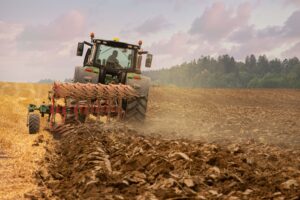
Tillage involves purposely disturbing the soil to bury, chop, sever, or desiccate weeds. The terms tillage and cultivation are often used interchangeably when referring to a method of controlling weeds through soil disturbance with a mechanical implement. Tillage is most common in agricultural settings but can also be used in non-crop areas and other rangelands. Effective tillage for weed control involves dragging metal blades, or tines, through the soil, usually pulled by a tractor. Tillage can result in short-term control of certain weeds but can also exacerbate weed problems in the absence of repeated treatments.
Landscape Plastic & Garden Plastic Sheeting:
An alternative weed control, often used in organic production, is plastic sheeting and mulches. These practices block growth and kills all weeds and plants covered by the material. Black/white UV-treated weed control polyethylene sheeting creates a warm, moist environment that mitigates weeds. As the soil warms, more weeds begin to come out of their dormancy. When seeds begin to germinate, they sprout into this dark, suffocating environment, void of sunlight or air movement resulting in the death of the plant. The remaining plant residues are then consumed by worms and other organisms involved in decomposition.
Hand Weeding:
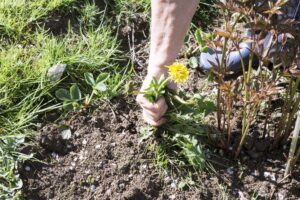
Clearing land for new garden space can be truly back-breaking work. Ask any gardening group about least favorite tasks, and you’re bound to hear a chorus of “Weeding!” Fifteen minutes prior to weeding, you should do a stretching routine to loosen your muscles and prepare your body for the task. Pulling up weeds involves identifying the weeds you want to remove from the garden bed, loosening the soil around the weed, and pulling the entire weed up from the root. Typically, a good day to weed is one day after a nice rain.
Hoe Weeding:
The practice of hoeing traces its long roots back to ancient civilizations. The struggle for existence between weeds and crop plants starts at the seedling stage, and, soon after emergence, weeds interact with nearby plants, either with other weeds or crops, and vie for shared growth resources. Hoeing is a fundamental agricultural practice that involves disruption of the soil surface to manage weeds and enhance soil aeration. There are three basic ways to kill weeds with a hoe: slicing them off, pulling or dragging them out of the soil, and burying them. Hoe weeding involves many workers and takes a great deal of time. If there are enough laborers and growers can afford them, then the system works. However, in the case of worker shortages, as our society faces now, things can change, facilitating a need for adaptation. Herbicides have substituted for laborers hoeing weeds out of fields and have reduced the need for cultivation of weeds with mechanical equipment, but historically, weed control has involved labor-intensive methods like manual pulling or plowing. Although these methods are still utilized, they can be time-consuming, costly, and detrimental to soil health. Modern agriculture seeks more efficient and sustainable ways to manage weeds.
Using Flames and Electric Shocks:
Electric weed control – also known as zapping – is the process of applying electricity directly to a plant to kill it. Because weeds have been found to build tolerances to some traditional herbicides and weed-killing sprays, electric weed management machines are becoming increasingly popular in agricultural weed removal. Electric weed maintenance machines work in a variety of ways. Most often, they use electricity to essentially boil the weeds, turning the water content in the weeds into steam from tip to root.
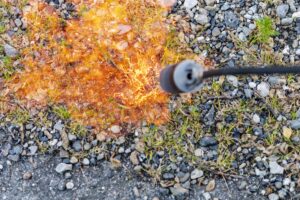
Flame weeding entails passing a flame over a weed to heat the plant tissues just enough to kill them. A flame weeder setup consists of a wand connected to a propane tank by a hose. The goal is not to burn up the weed, but to destroy plant tissue so that the weed dies. Flame weeding kills the above ground portion of the weed, but it doesn’t kill the roots. When flame weeding, the most effective method is to catch weeds early, from 1-4 inches. At this small stage, flaming is nearly 100% effective at killing weeds. As with any weeding method, if you kill back the tops often enough, the weeds will eventually give up and die.